Fix operations and align people
Each scooter now costs ₹6,000 more to make, and nobody can say why. See how value chains, bottlenecks and the right incentives bring costs back down.
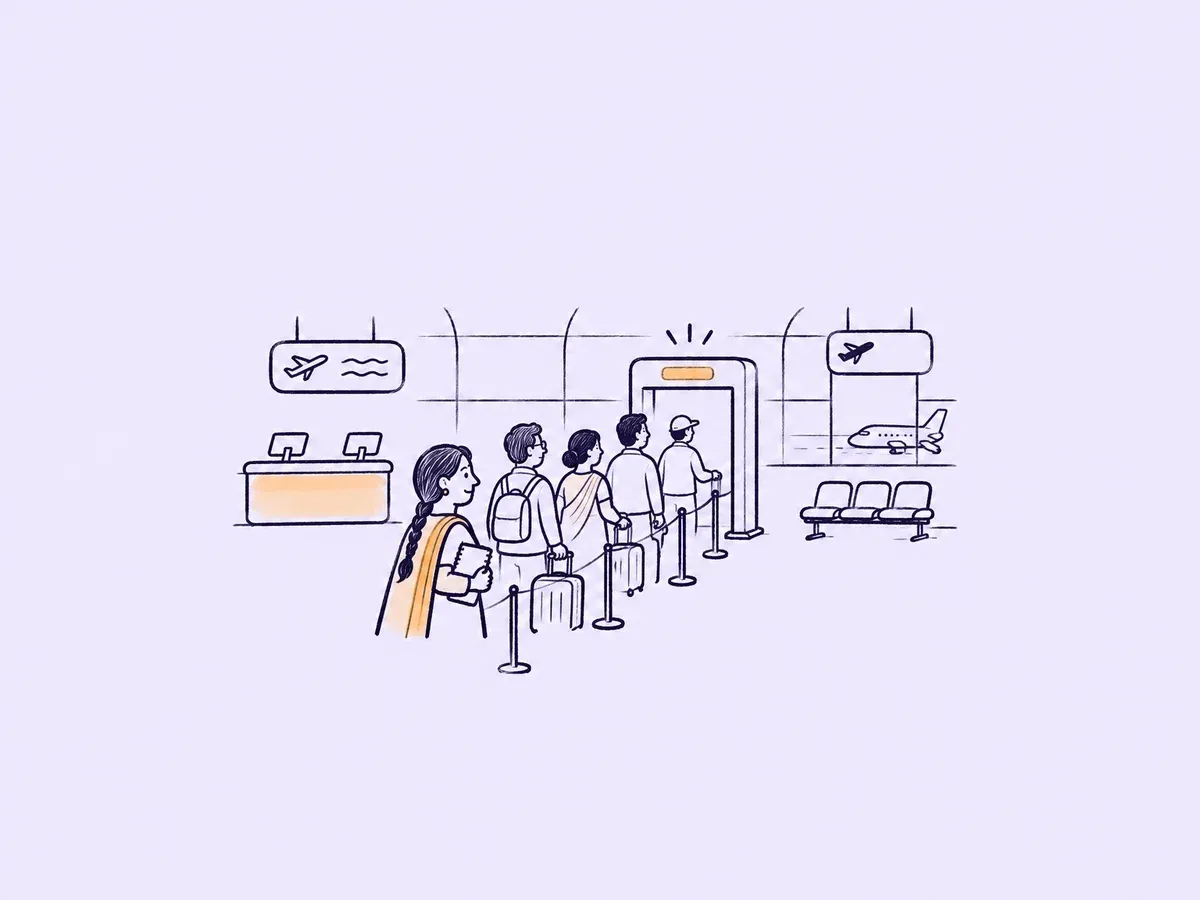
The airport security queue
At Delhi airport, check-in may be quick and the gates may be empty, yet everyone waits at security. More check-in counters wouldn’t help.
One slow step decides how fast the whole line moves. Keep that in mind as we enter Meera’s factory.
Porter’s value chain
Michael Porter described a business as a series of linked activities, each adding value (the “value chain”). Here is Meera’s:
Source parts→ Make scooters→ Deliver to dealers→ Sell→ ServiceEvery step has a cost, so we can see where money goes.
Where ₹6,000 went
As we saw in the first lesson, each scooter costs ₹6,000 more. Meera traces this along the chain:
Battery price +₹4,000Overtime, rework +₹1,500Freight +₹500Total +₹6,000Batteries are the biggest item, but the factory is fully in her hands. She starts there.
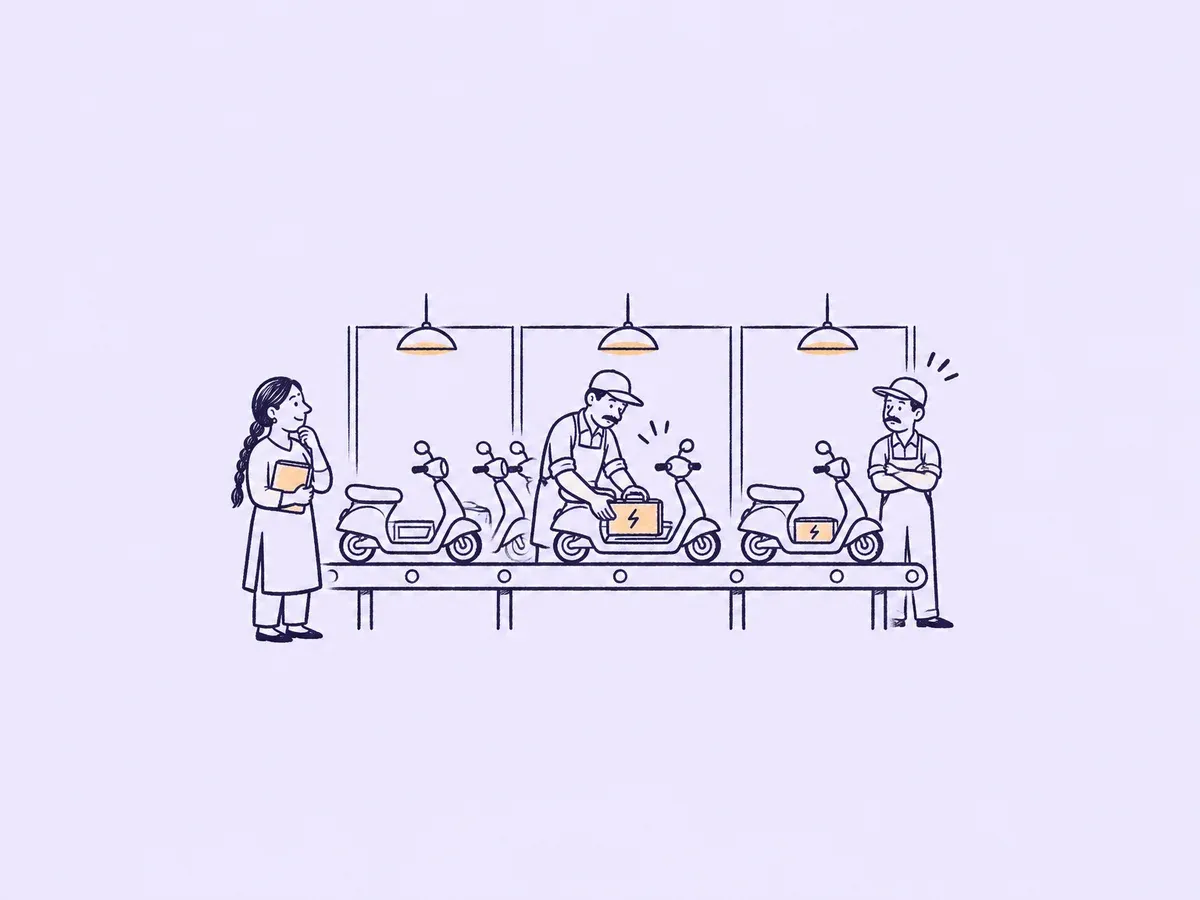
The bottleneck
On Meera’s line, half-built scooters pile up at battery fitting while the next station waits. This slowest step is the “bottleneck”.
Just like the security queue, it holds up everything. To keep up, workers stay late and rush, which brings overtime and rework.
Capacity maths
Say the factory runs 250 days a year. Each station handles this many scooters a day:
Frame 120Battery fitting 80Testing 11080 × 250 = 20,000 a yearSelling 25,000 needs 100 a day. A second battery bay closes the gap.
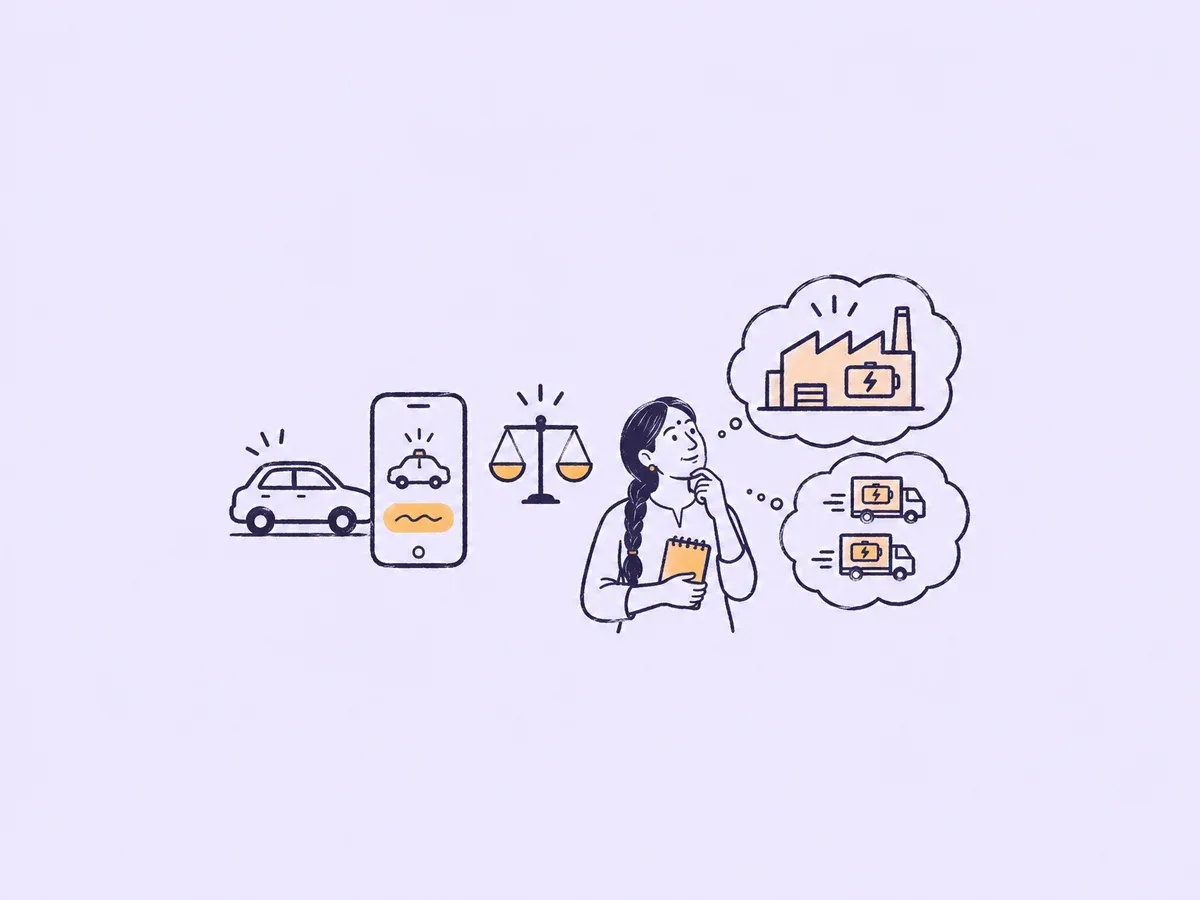
Make or buy?
Should you own a car or book cabs? It depends on how often you travel and what you’d rather manage.
Meera faces this with batteries. A plant costs crores and needs rare skills. So she keeps buying, but adds a second supplier to bargain on price.
McKinsey 7S
Plans stall when the organisation doesn’t fit them. McKinsey’s “7S” model checks 7 parts:
Strategy StructureSystems Shared valuesStyle StaffSkillsMeera’s strategy now depends on quality. Do her systems, like pay and bonuses, support that?
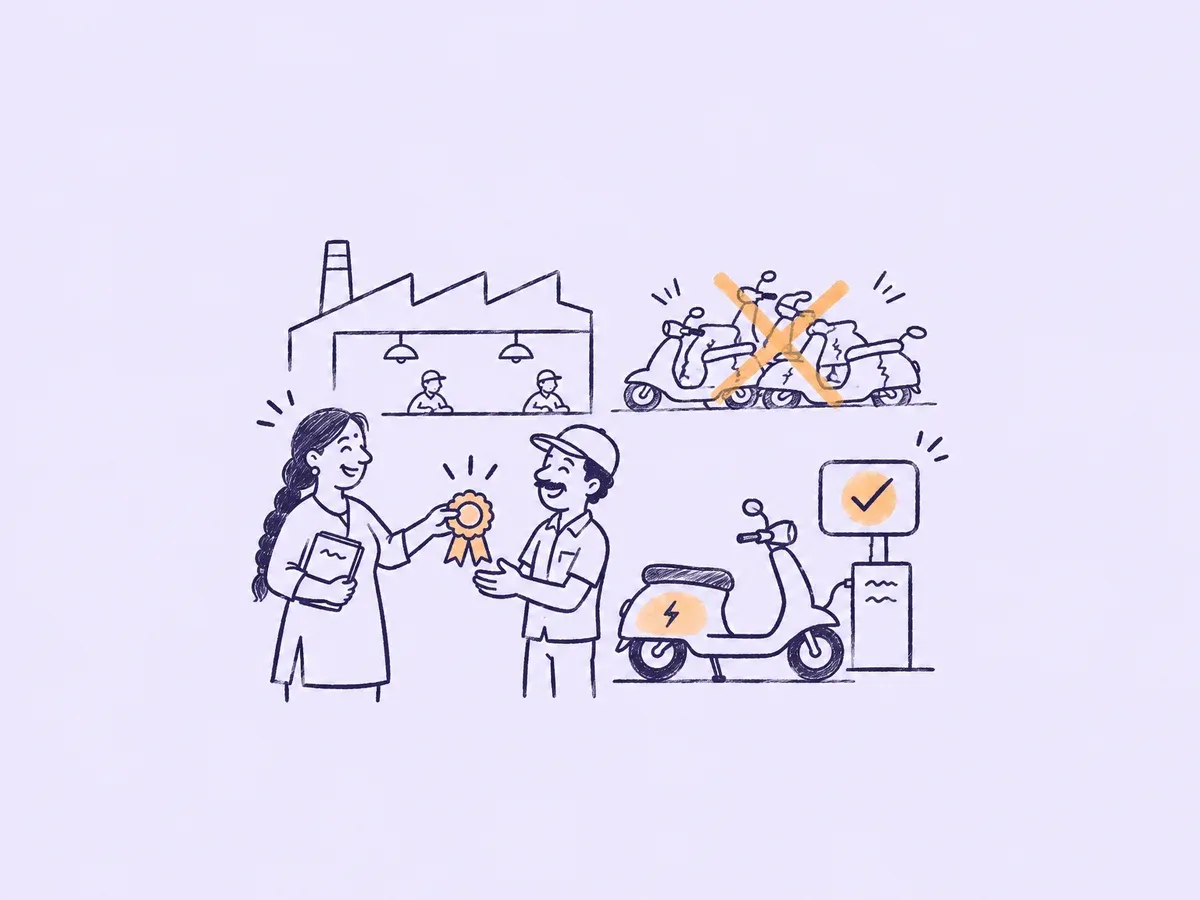
You get what you reward
Reward a bus driver only for speed, and passengers get a rough ride. People chase what is measured.
Meera’s supervisors earn bonuses on scooters built per shift, so they rush and defects rise. She now rewards scooters that pass testing first time.
The road back to profit
Meera ranks her fixes by gain per scooter and effort:
Fix Gain ₹ EffortSecond bay 1,500 LowFair pricing 2,000 MediumNew supplier 2,500 MediumTotal 6,000If sales hold, 25,000 × ₹16,000 gives ₹40 crore. After fixed costs, profit returns to ₹20 crore.
Summary
- Value chain: Follow each step to see where costs rise.
- Bottleneck: The slowest step sets total output, so fix it first.
- Make or buy: Make something yourself only when it gives a clear advantage.
- People: Use 7S to check fit, and reward what you really want.