Choose where to grow
Profit is recovering, so should Meera now sell to delivery fleets? See how to size a market, judge its competition and choose the way in.

Should you open a second shop?
Your mobile repair shop in Madurai is doing well. Before opening another, you’d ask: are there enough customers, who is already there and why would people choose you?
Meera has the same questions about selling to parcel delivery fleets.
What is strategy?
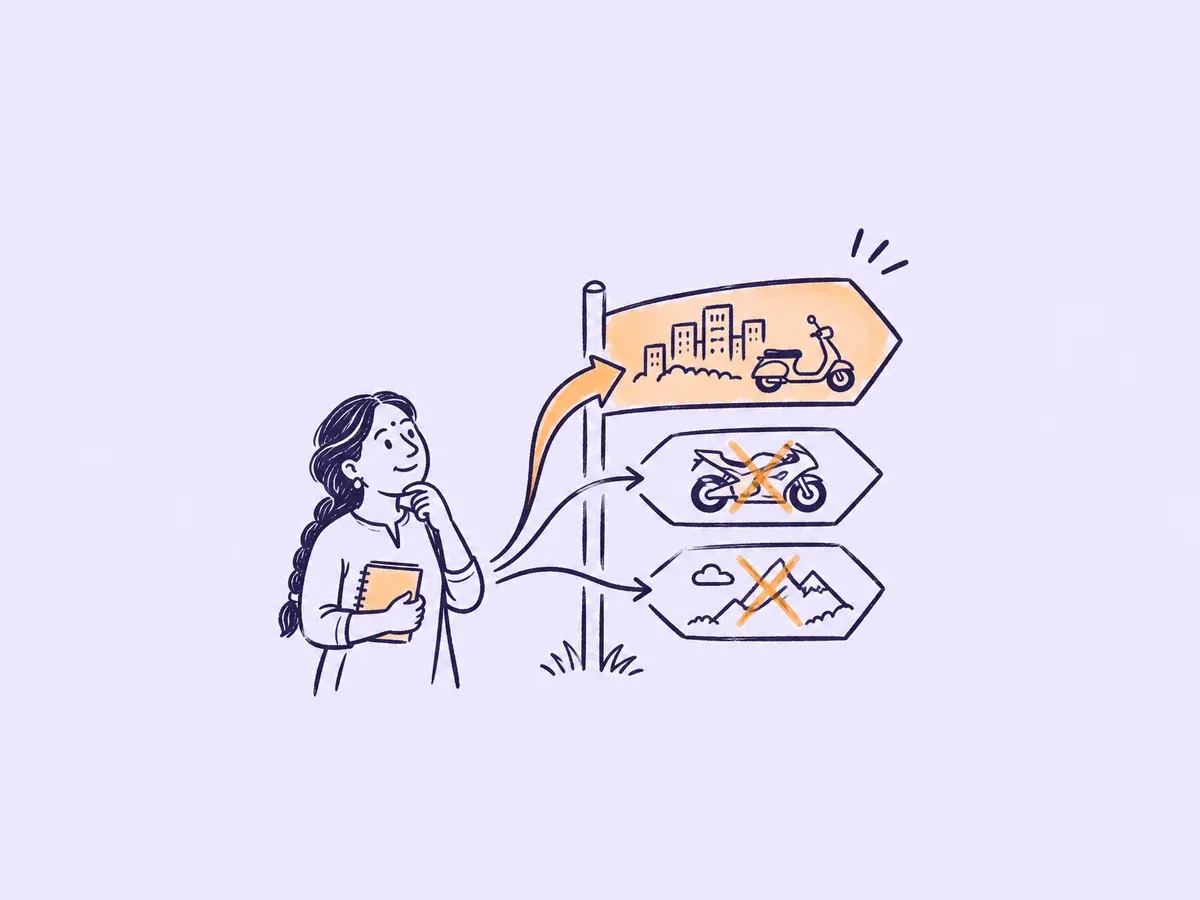
Meera can’t chase every opportunity. Strategy means choosing where to compete, how to win and what not to do.
For her, that could be city scooters, won on low running costs, with no expensive sports models.
The Ansoff matrix
Igor Ansoff mapped 4 routes to growth:
- Market penetration: same product, same buyers
- Product development: new product, same buyers
- Market development: same product, new buyers
- Diversification: new product, new buyers
Selling scooters to fleets is market development.
Sizing the market
Meera has no report, so she estimates (consulting jargon: “market sizing”). These numbers are made up:
Delivery riders 5,00,000In fleets (20%) 1,00,000Replaced yearly (1 in 4) 25,000× ₹90,000 = ₹225 croreThat’s almost as big as her ₹240 crore revenue today.
Porter’s forces: who squeezes you?
A big market can still be a poor one. Michael Porter’s “Five Forces” show who takes the profit. Here are the first 3:
- Rivals: many makers cutting prices
- Buyers: large fleets bargaining hard
- Suppliers: few battery makers
For Meera, buyers worry her most.
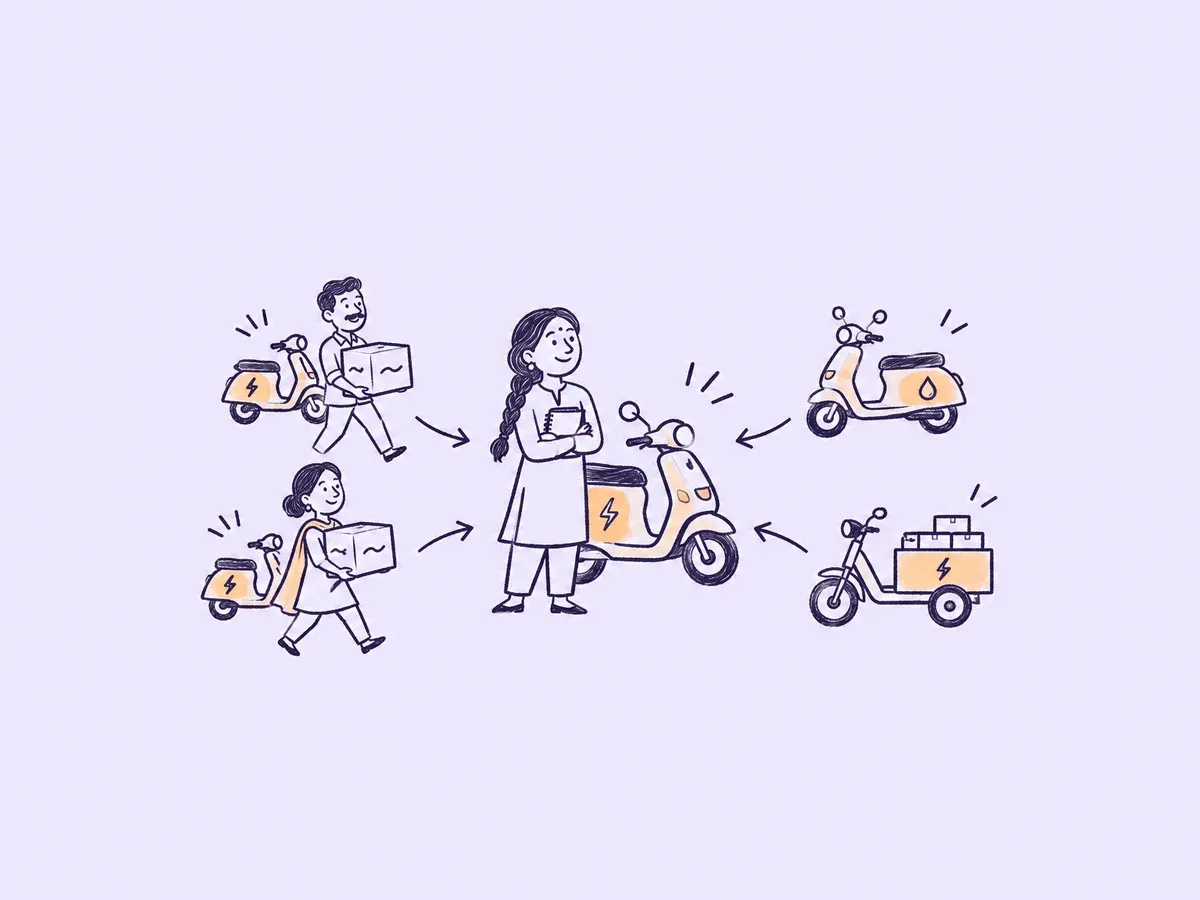
Porter’s forces: who replaces you?
The fourth force is new entrants. If starting up is easy, fresh rivals keep arriving.
The fifth is substitutes: different products doing the same job. A fleet could choose petrol scooters or electric cargo cycles instead of Meera’s scooters.
Why would we win?
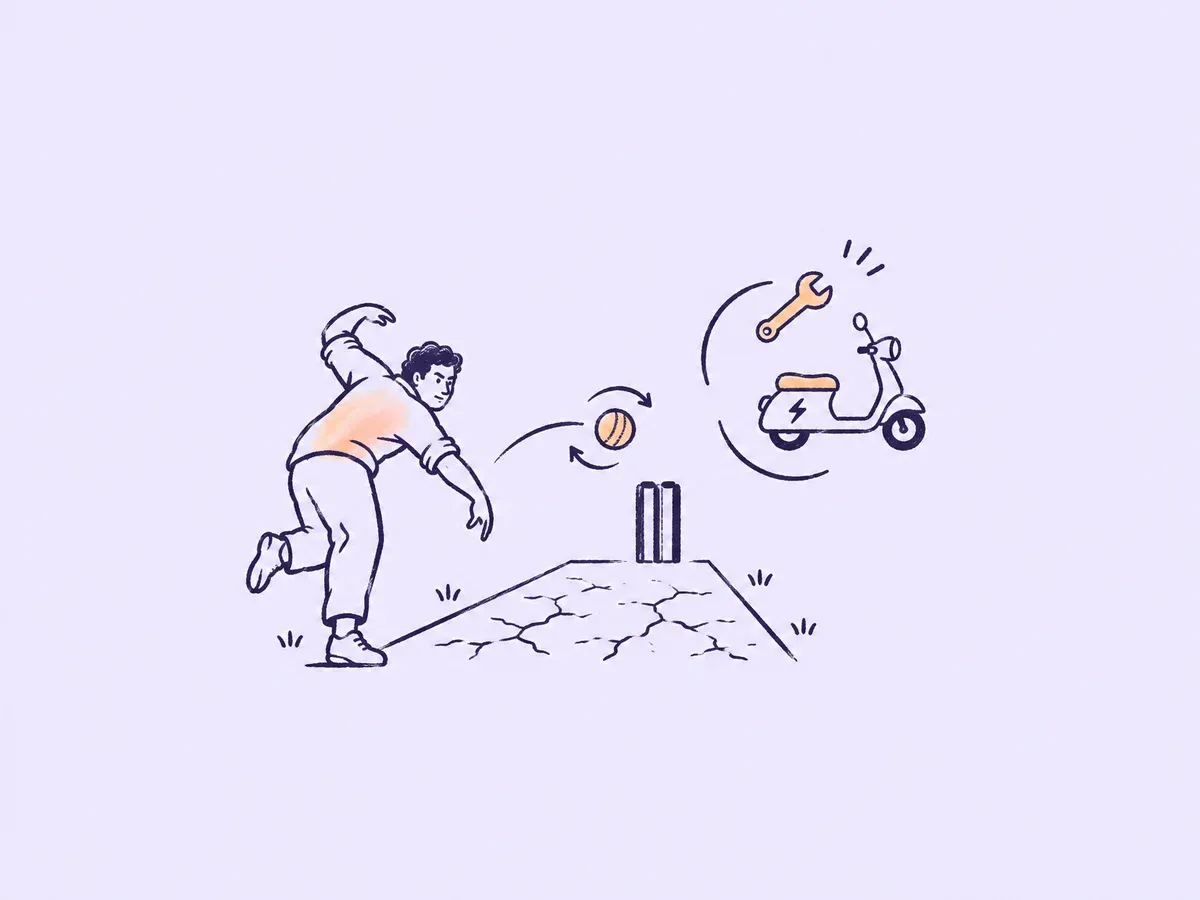
A slow Chennai pitch favours a team with great spinners. An edge like this that rivals can’t easily copy is a “competitive advantage”.
Meera’s is her dealer service network. Fleets lose money whenever a scooter sits idle, and she can repair it fast.
Build, buy or partner
Meera has 3 ways in:
- Build: her own fleet team, slow but controlled
- Buy: acquire a company, fast but costly
- Partner: join a parcel firm, quick and shared
Buying pays only if both earn more together (“synergy”). She chooses a partner.
The BCG matrix
Boston Consulting Group sorted businesses by market growth and market share:
- Star: high growth, high share
- Cash cow: low growth, high share
- Question mark: high growth, low share
- Dog: low growth, low share
Meera’s commuter scooter is her cash cow. It can fund the fleet question mark.
The Pyramid Principle
Busy leaders want the conclusion first. Barbara Minto’s “Pyramid Principle” puts the answer on top, with reasons beneath:
Run a 500-scooter fleet pilotwith a parcel partner.Why:1. ₹225 crore yearly market2. Service network edge3. Small, low-risk first stepSummary
- Strategy: Choose where to compete, how to win and what to skip.
- Market: Use Ansoff, market sizing and Five Forces to judge an opportunity.
- Entry: Know your advantage, then build, buy or partner.
- Recommendation: Use the BCG matrix to fund bets, and state your answer first.