From users to needs
Your app can’t serve everyone equally well, so who comes first? See how product teams split users into segments, pick one and uncover what it needs.
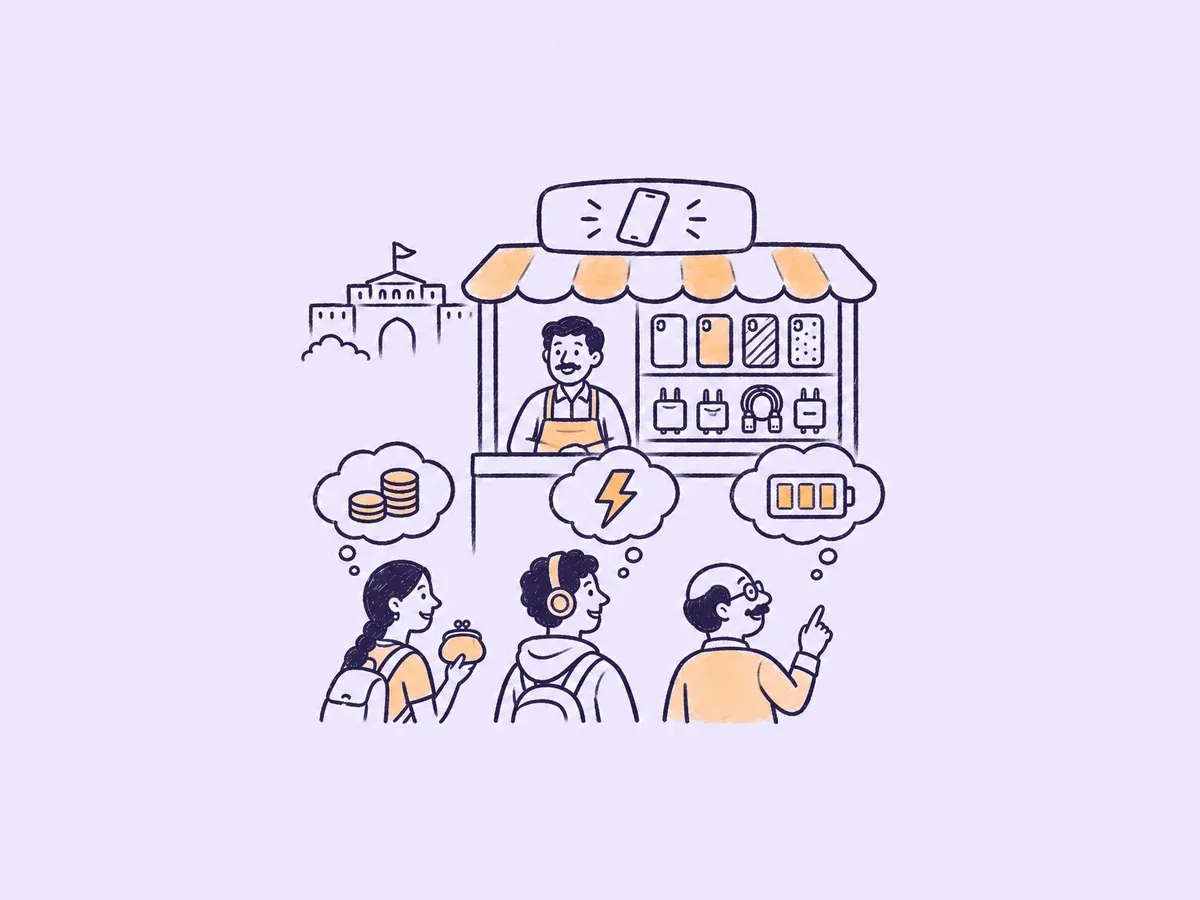
One shop, many customers
Imran’s phone shop gets 3 visitors today. A student wants the lowest price. A gamer wants speed. A parent wants a big battery and simple settings.
Same shop, same phones, yet each wants something different. One sales pitch won’t win them all.
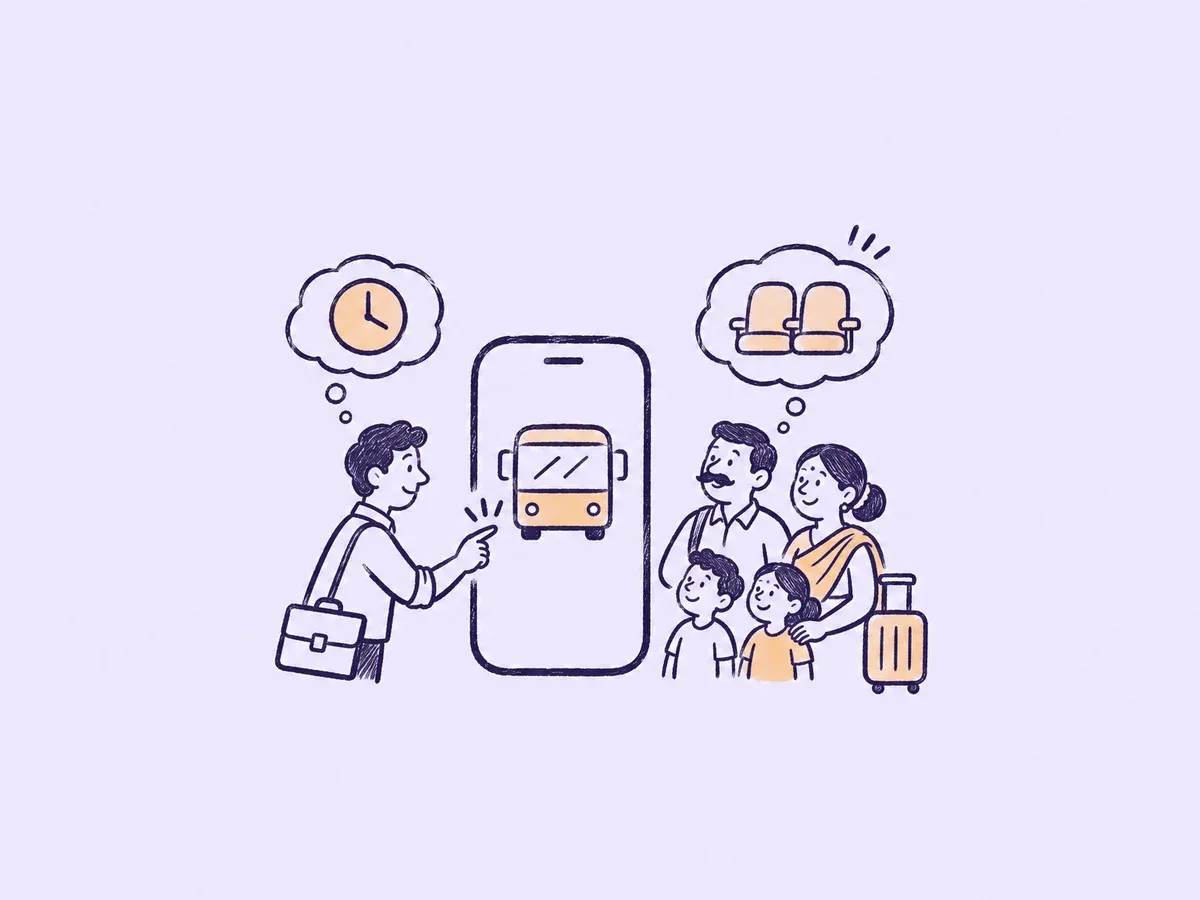
The app for everyone
As we saw in the last lesson, Riya starts with users. Her boss says the bus app is “for everyone”.
But a daily commuter wants quick rebooking, while a family wants seats together. Try to please everybody at once, and nobody gets a great experience.
User segments
So Riya groups passengers who want similar things (PM jargon: “user segments”). Her app has 4:
- Daily commuters
- Students going home
- Families on festival trips
- First-time bus travellers
Each group uses the same app for a different reason.

Same age, different needs
Aarav is 22 and Mr Kulkarni is 58. They look nothing alike on paper, yet both are taking an overnight bus for the first time.
Both share the same worries. So age or city alone can mislead. Group people by what they are trying to do.
Choosing a segment
Riya can’t serve all 4 at once. She compares their size, their pain and their fit with her app:
Group Size Pain FitCommuters High Low MedStudents High Med HighFamilies Low Med MedFirst-timers High High HighFirst-timers score best, so she starts there.
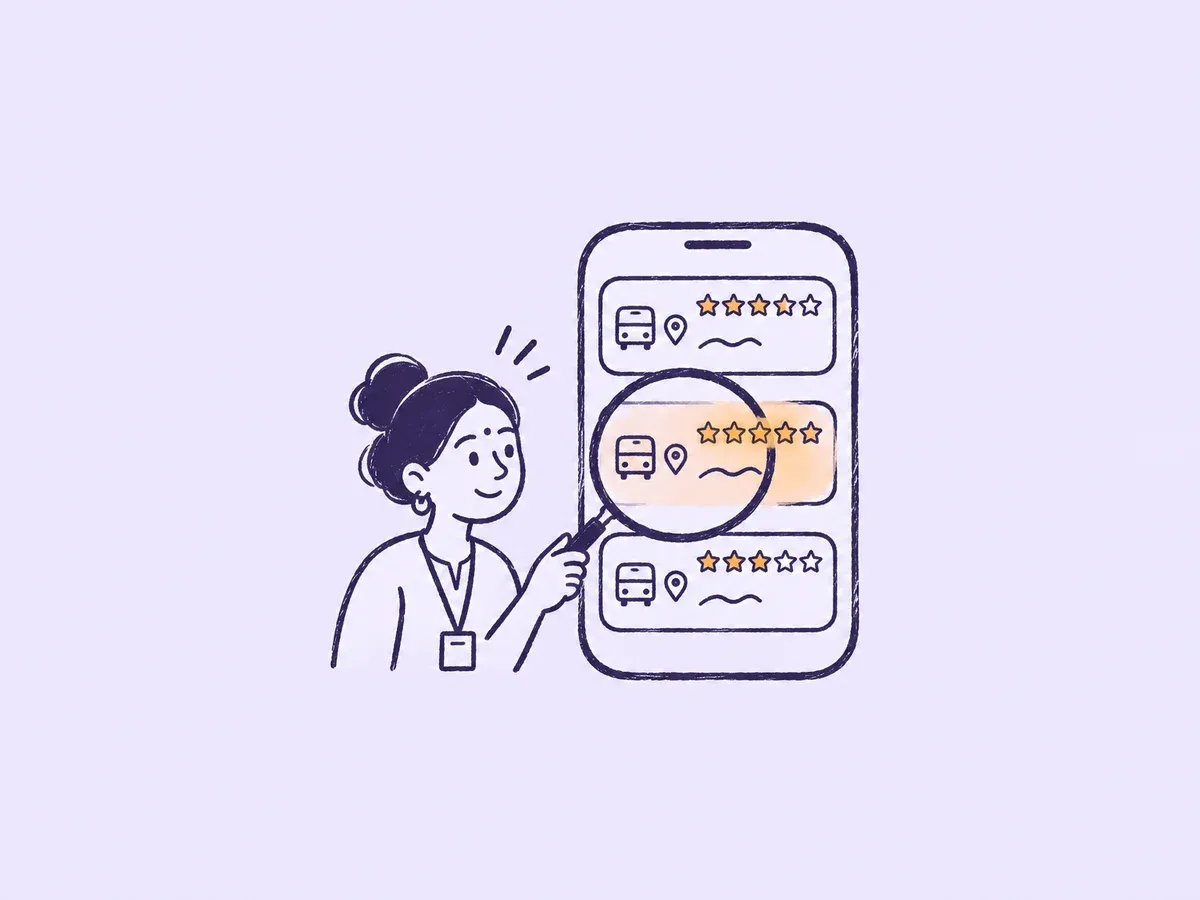
“Add live bus tracking”
First-timers keep writing the same thing in app reviews: “Please add live bus tracking.” It sounds like a clear instruction, and building it would take months.
But a request is only a user’s guess at a solution. What is the problem underneath?
Asking about the past
Riya calls 5 first-timers. She avoids questions about the future, because people are poor at predicting what they’ll do.
Weak:Would you use live tracking?Better:What happened on your lastnight trip?Real stories reveal real problems.
The 5 whys
Neha asked for tracking. Riya keeps asking “why” until the cause appears (PM habit: “the 5 whys”). It often takes fewer:
Why tracking?I can't see the bus.Why does that matter?I might miss it.Why would you miss it?I can't find the stop.Her real problem is finding the boarding point at night.
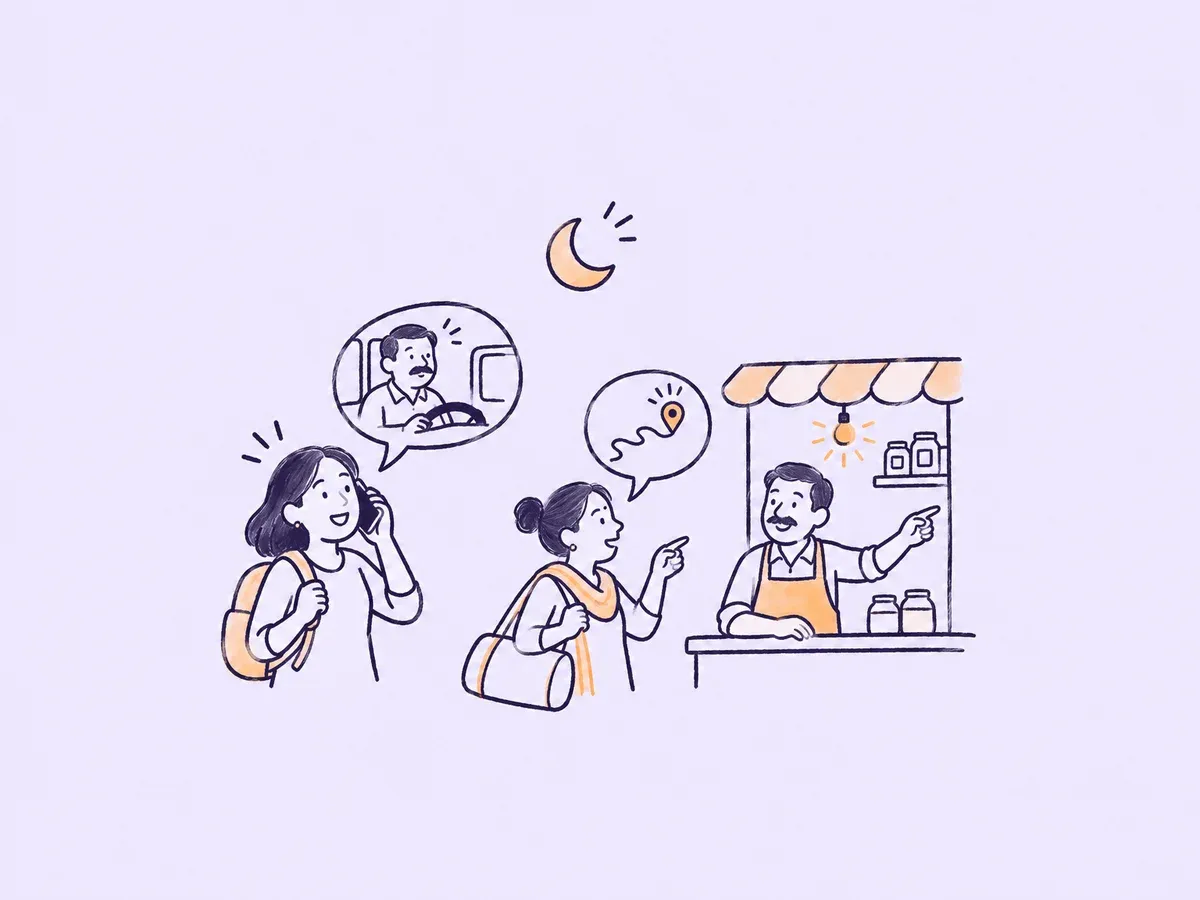
What people do today
How do first-timers cope now? Neha phones the driver, who is busy on the road. Others reach the stop an hour early or ask nearby shopkeepers.
These workarounds prove the problem is real. People already spend time and worry on it.
The needs list
After 5 calls, Riya writes down what first-timers need:
- Find the boarding point easily
- Know the bus is on its way
- Feel safe while waiting
None of these mentions a feature. A need describes what a person wants done, not how the app does it.
The need statement
Riya turns the biggest need into 1 clear sentence, using a simple pattern:
[Segment] needs [what]because [why].First-time travellers need tofind their boarding point atnight, because missing itloses the whole trip.Now the team knows who it is solving for.
Summary
- Segments: Group users by what they are trying to do.
- Focus: Pick the segment with the best mix of size, pain and fit.
- Needs: Ask about real past events to find the problem behind a request.
- Need statement: Say who needs what, and why, in 1 sentence.